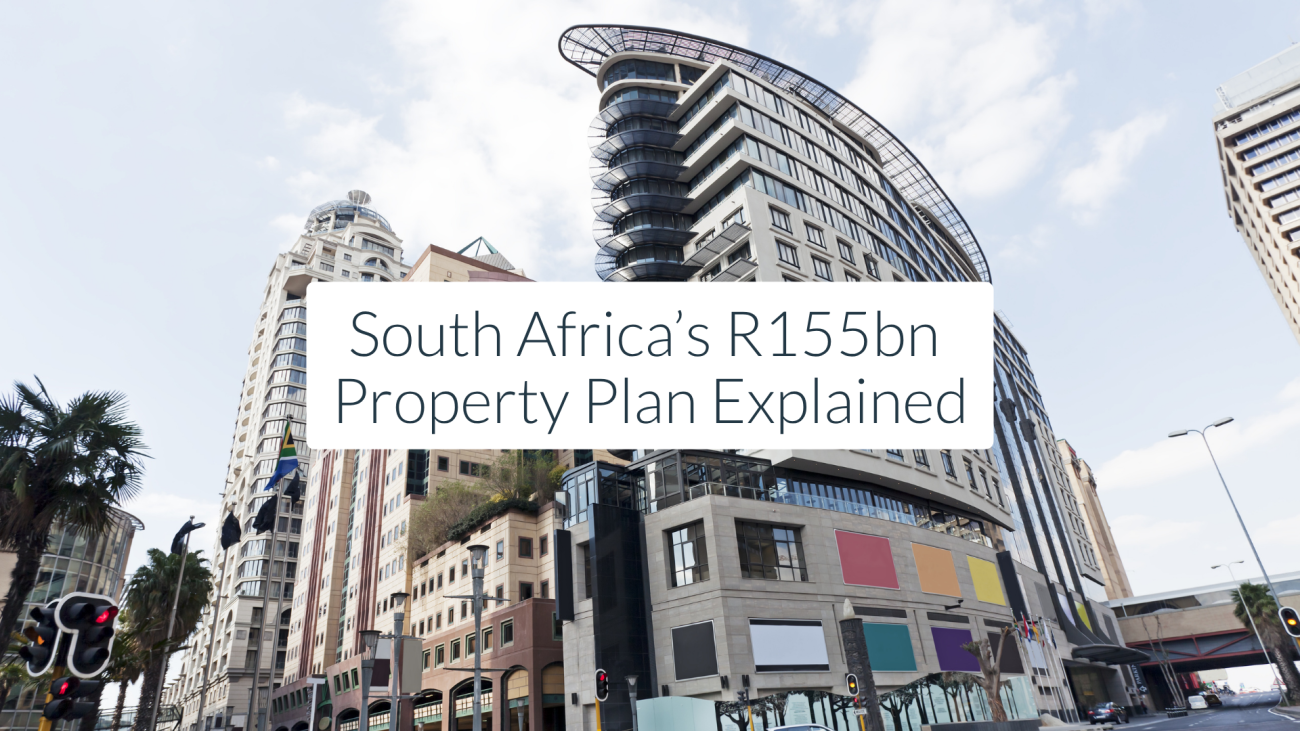
What You Need to Know About the Government’s R155bn Property Plan
By John Jack, CEO of Galetti Corporate Real Estate
South Africa’s R155bn Property Plan marks one of the most significant structural shifts in how the state approaches real estate ownership, management, and long-term value creation. As the country’s largest property owner, government controls a vast portfolio that has historically been underutilised, poorly maintained, and inefficiently managed.
That could change with the proposed South African National Property Company (SANPC), a new state-owned entity set to oversee roughly 88,000 buildings and five million hectares of land valued at about R155 billion.
The idea behind SANPC is simple: introduce professional asset management and commercial discipline to public property. If successful, this shift could improve building conditions, increase efficiency, and unlock significant long-term value for the state. However, transforming a portfolio of this size will take time, with meaningful impact likely only emerging over the next decade.
Understanding the R155bn Property Plan and SANPC’s Role
At its core, the R155bn Property Plan is about repositioning government-owned real estate as a strategic asset rather than a passive liability. From a market perspective, this represents a transition towards institutional-grade asset management, similar to what is seen in listed property funds and sovereign wealth-backed portfolios globally.
SANPC’s mandate is expected to include:
- Centralised asset oversight and performance tracking
- Structured maintenance and refurbishment programmes
- Strategic disposal or repurposing of non-core assets
- Improved leasing and occupancy management
From our experience advising corporate occupiers and property owners, the lack of centralised control has long been a key inefficiency in the public sector. Introducing a single, accountable entity could significantly improve decision-making speed, capital allocation, and long-term planning.
Inefficiencies Must Be Addressed Within the R155bn Property Plan
One of the biggest opportunities within the R155bn Property Plan lies in addressing inefficiencies. Government faces a maintenance backlog of nearly R30 billion while spending around R6 billion annually leasing office space from private landlords – despite owning many vacant buildings.
Redirecting funds from leasing into upgrading state-owned properties could reduce waste and strengthen public assets.
This approach would require substantial upfront investment, particularly to refurbish neglected buildings. But it could also stimulate economic activity, boosting construction, infrastructure upgrades and local job creation. Strong governance and transparency will be essential here.
SANPC could also reposition government property as a revenue-generating asset rather than simply operational infrastructure. The long-term vision includes building a sovereign-style investment platform, where public real estate contributes to national income and attracts private investment.
A key insight from working within the commercial property sector is that underutilised portfolios often represent hidden value. Unlocking that value requires disciplined capital deployment, clear performance benchmarks, and a long-term view – all of which SANPC aims to introduce.
Revitalisation Opportunities Linked to the R155bn Property Plan
Beyond internal efficiencies, the R155bn Property Plan has the potential to support urban regeneration. Many government buildings are located in key economic hubs, including struggling central business districts.
Upgrading these assets could help revitalise surrounding areas, restore investor confidence, and attract further development.
Planned projects reportedly include:
- Redevelopment of government precincts
- Upgrades to logistics infrastructure such as harbours
- Improvements to public service facilities including courts and police stations
From a real estate advisory perspective, this type of intervention often acts as a catalyst. When large, visible assets are upgraded, it signals confidence in a node, which in turn encourages private sector investment and stabilises surrounding property values.
In nodes where vacancy and neglect have become entrenched, this kind of structured intervention can materially shift market sentiment.
How the R155bn Property Plan Impacts the Office Market
The private property sector may also feel the effects of the R155bn Property Plan. Government tenants currently occupy a large share of lower-grade office space, and a shift back into state-owned buildings could increase vacancies in that segment.
However, any changes are expected to happen gradually over several years.
In the short term, government-owned properties are unlikely to disrupt rental pricing significantly, as they typically operate at market-related levels and involve complex leasing structures.
From a leasing and advisory standpoint, this creates a nuanced outlook:
- B-grade and lower-grade office stock may experience increased vacancy pressure
- Well-located, high-quality office assets are likely to remain resilient
- Landlords reliant on government tenants may need to reposition or diversify
A key takeaway is that this is not an immediate disruption, but rather a slow structural shift that market participants need to monitor closely.
Investment Implications of South Africa’s R155bn Property Plan
For investors, the R155bn Property Plan introduces both risk and opportunity.
On one hand, reduced government leasing could impact income stability in certain office segments. On the other, the introduction of a more structured, commercially driven public property platform could unlock new forms of partnership and investment.
Potential opportunities include:
- Public-private partnerships on redevelopment projects
- Access to repositioned or surplus government assets
- Increased activity in construction and infrastructure-linked sectors
From an investment strategy perspective, this reinforces the importance of asset quality, location, and tenant diversification. Portfolios heavily weighted towards single tenant reliance, particularly government, may require reassessment.
Governance, Execution, and Long-Term Outlook
While the R155bn Property Plan presents a compelling framework, execution will ultimately determine its success.
Key risks include:
- Governance and oversight challenges
- Funding constraints for large-scale refurbishment
- Operational inefficiencies during the transition phase
However, if managed effectively, SANPC could introduce a level of professionalism and accountability that has historically been lacking in public sector property management.
Based on market experience, large-scale portfolio transformations typically unfold over extended periods. The expected timeline of meaningful impact over the next decade aligns with global benchmarks for similar initiatives.
Final Thoughts on the R155bn Property Plan
The creation of SANPC represents a significant shift in how South Africa manages public property. While challenges around scale, funding, and governance remain, the concept offers a clear opportunity: turn a largely underperforming asset base into a driver of economic growth, investment, and long-term value for the state.
From a commercial real estate perspective, the R155bn Property Plan should be viewed as a structural evolution rather than a short-term disruption. For investors, landlords, and occupiers, the key will be understanding where the risks lie and where new opportunities are likely to emerge as the strategy unfolds.
For broader market insights, visit our LinkedIn newsletter or visit our Newsroom