
A corporate relocation is a strategic real estate manoeuvre, not a logistics exercise. If your board views the move simply as shifting desks, they have already lost value. Engaging expert corporate office relocation services is the difference between a fragmented transition and a refined expansion. With UK lease accounting standards under FRS 102 aligning with IFRS 16 as of January 2026, the financial implications of your property portfolio are now more visible on your balance sheet than ever before.
We recognise the pressure to avoid operational downtime whilst navigating hidden costs in complex lease agreements. You require a seamless transition that protects staff morale and secures a competitive advantage. This guide provides the definitive roadmap for 2026. We detail how to master strategic site selection, lease negotiation, and logistical execution to ensure your next move drives long-term efficiency and growth.
Key Takeaways
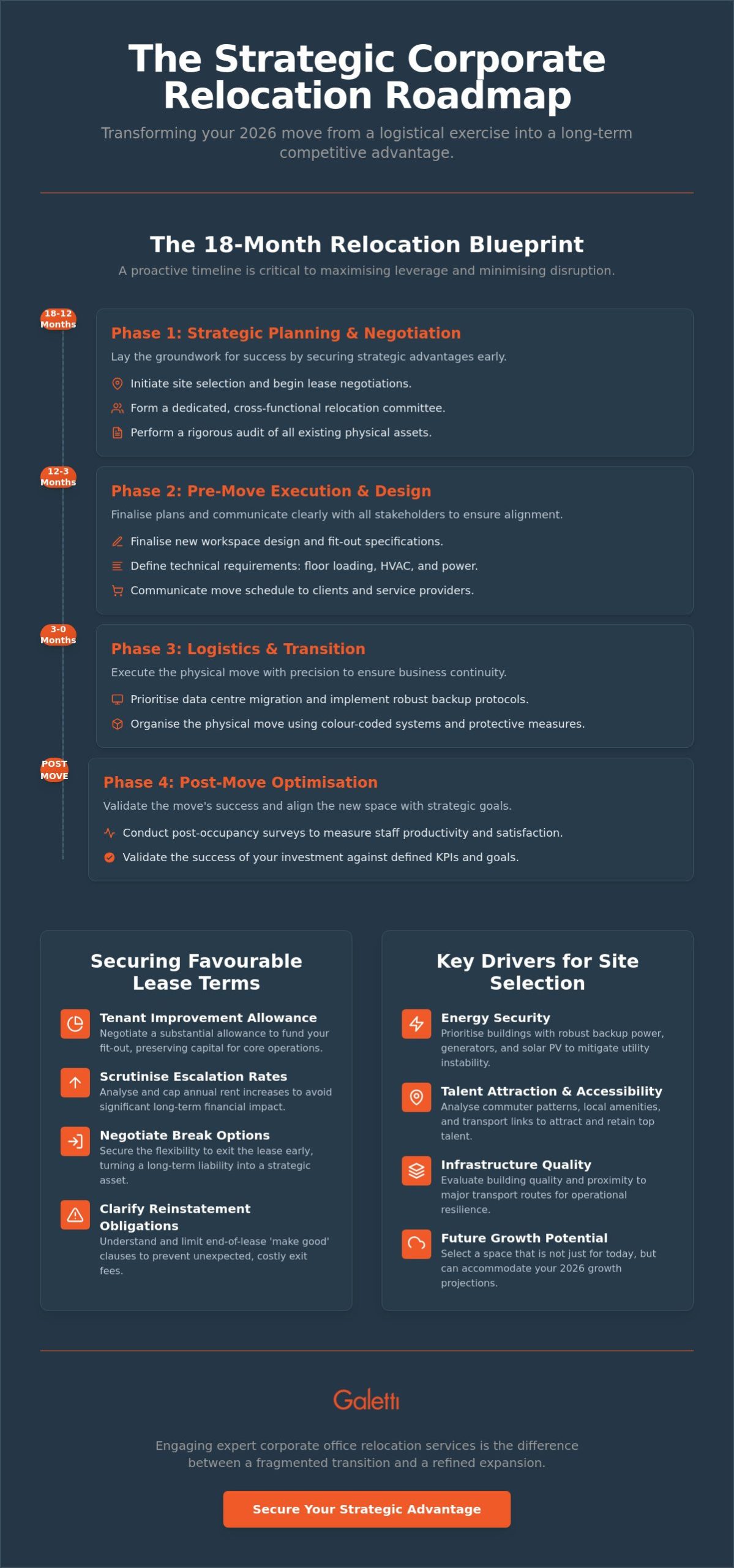
- Secure a strategic advantage by initiating the site selection and lease negotiation process at least 12 to 18 months in advance.
- Minimise operational friction by establishing a dedicated relocation committee and performing a rigorous audit of all existing physical assets.
- Ensure business continuity through specialised corporate office relocation services that prioritise data centre migration and robust backup protocols.
- Organise the physical move with precision using colour-coded systems and protective measures to avoid costly damage or reinstatement fees.
- Validate the success of your investment by conducting post-occupancy surveys to align the new workspace with staff productivity goals.
Strategic Site Selection and Lease Negotiation
Successful corporate office relocation services extend far beyond the physical transport of equipment. At this level, relocation is a comprehensive advisory process that encompasses both strategic site acquisition and the disposal of existing assets. It’s a high-stakes manoeuvre that requires a deep understanding of portfolio alignment. Expert employee relocation services in the commercial sector focus on the long-term viability of a workspace rather than just the logistics of the move date.
Timing is the most critical factor in securing a competitive advantage. The search for a new centre of operations must begin 12 to 18 months before your current lease expires. This window provides the necessary leverage to walk away from unfavourable deals and ensures enough time for a bespoke fit-out. If you rush the process, you’re forced to accept market-standard terms rather than negotiated concessions. A proactive approach allows for a data-driven market analysis. This ensures your chosen location attracts top talent by considering commuter patterns, local amenities, and precinct security. Your new space must be a catalyst for your 2026 growth projections, not a constraint on them.
Analysing Market Dynamics in South Africa
Current vacancy rates across South African commercial nodes continue to dictate tenant bargaining power. Whilst some sectors face oversupply, premium Grade-A spaces in high-demand precincts remain competitive. Energy security is now a primary driver in site selection. We prioritise buildings with robust back-up power infrastructure, including integrated generators and solar PV installations, to mitigate the risks of utility instability. Infrastructure quality and proximity to major transport routes are essential metrics. We evaluate these variables to ensure your organisation remains operational and accessible regardless of regional service delivery challenges.
Securing Favourable Lease Terms
A lease agreement is a significant financial liability that requires expert oversight. We focus on negotiating a substantial commercial tenant improvement allowance South Africa to fund your internal fit-out. This preserves your capital for core business operations. Beyond the base rental, we scrutinise escalation rates, break options, and reinstatement obligations. These clauses often contain hidden costs that can impact your balance sheet years later. Utilising professional corporate real estate leasing services ensures your interests are protected by seasoned negotiators who understand the nuances of the South African property market. We turn your lease into a flexible strategic asset.
A Step-by-Step Timeline for a Seamless Transition
Execution begins with the formation of a dedicated relocation committee. This cross-functional team, comprising leaders from IT, HR, and operations, ensures internal alignment and maintains clear communication channels throughout the move. Their first task is a comprehensive asset audit. You must determine which items will move, which will be sold to recover value, and which require compliant recycling. Engaging a professional project manager at this stage is a prerequisite for success. They act as the central point of contact between landlords, fit-out contractors, and providers of corporate office relocation services, preventing the logistical bottlenecks that lead to operational downtime.
Transparency is vital to protect your brand reputation during a transition. You should communicate the move schedule to all stakeholders, including clients and primary service providers, well in advance. This period is also the time to finalise your new workspace design. Ensuring the layout supports your office space optimisation strategy is essential for long-term productivity. A well-designed floor plan facilitates better workflow and reflects your corporate culture in the new environment. For expert oversight of these moving parts, engaging specialised corporate services ensures that every milestone is met with precision.
The Pre-Move Planning Phase
Before any hardware is packed, you must define the technical requirements of the new facility. This includes assessing floor loading capacities for heavy equipment and ensuring HVAC systems can handle the density of your new server rooms. Establishing a realistic budget is equally critical. It must account for both visible expenses and hidden relocation costs. Industry best practices suggest including a contingency reserve of at least 10 to 15 per cent to handle unexpected variables. A detailed step-by-step timeline with clear accountability is the only way to track progress against these financial and operational goals.
Vendor Selection and Management
The complexity of a 2026 corporate move requires vendors with proven experience in large-scale transitions. When choosing corporate office relocation services, vet contractors based on their technical proficiency and their ability to work within strict timeframes. Interior designers and fit-out teams should be selected based on their track record of delivering high-performance workspaces. Insurance coverage is the final pillar of risk management. Verify that your movers carry comprehensive cargo and general liability insurance to protect high-value corporate assets during transit. If you require expert guidance on managing these complex logistics, you can speak with our advisory team to streamline the process.
Safeguarding IT Infrastructure and Data Centres
Business continuity relies entirely on the integrity of your digital assets. Whilst physical furniture is a matter of spatial logistics, transitioning your digital core requires a rigorous technical roadmap. High-tier corporate office relocation services prioritise the migration of mission-critical hardware to ensure your organisation remains operational. A robust data backup and recovery plan is non-negotiable. This plan must be executed and verified before a single server is disconnected. You can’t afford to discover a corrupted backup after the hardware has left the building.
Coordination with telecommunications providers is the most common cause of post-move delays. Internet and phone line provisioning often requires a 60 to 90-day lead time for activation. If this isn’t managed early, your new centre of operations will be offline on day one. To facilitate rapid reassembly, implement a systematic labelling and mapping system. Every port, cable, and peripheral should be tagged according to a master floor plan. This level of detail allows your IT team to restore connectivity without troubleshooting basic hardware configurations during the critical first hours of occupancy.
Minimising Technical Downtime
Execution timing is vital for maintaining productivity. You should schedule the IT move during off-peak hours or over a weekend to avoid disrupting staff output. When relocating IT infrastructure, use specialised anti-static packaging and climate-controlled transport. Sensitive electronics are vulnerable to static discharge and thermal shock during transit. Once the equipment arrives at the destination, conduct a full system audit immediately. Verify every connection and run performance stress tests to ensure the environment is ready for the Monday morning start.
Compliance and Data Security
Data security is a legal mandate that doesn’t pause during a move. All hardware transport must comply with POPIA and other relevant data protection regulations. You must maintain a strict, documented chain of custody for all devices containing sensitive corporate data. If the move reveals redundant IT equipment, don’t simply discard it. Securely recycle Waste Electrical and Electronic Equipment (WEEE) through certified providers. This mitigates the risk of a data breach from discarded hard drives and ensures your business remains compliant with environmental regulations. Professional corporate office relocation services provide the oversight needed to manage these technical risks with precision.
Executing the Physical Move: Logistics and Protection
Precision is the hallmark of professional corporate office relocation services. You must implement a colour-coded labelling system to categorise assets by department and floor level. This eliminates confusion during the offloading phase and ensures every crate reaches its designated station. Modular furniture systems require specialised technicians for dismantling and reassembly. Standard movers often lack the technical expertise to handle these complex configurations without causing structural damage or compromising future stability. Protecting the physical premises is equally vital. Use floor protection, corner guards, and lift padding at both the origin and destination. This prevents scuffs and impact damage that lead to costly reinstatement claims from landlords upon exit.
High-value assets require bespoke handling protocols. Artwork, industrial safes, and specialised machinery must be crated and transported using equipment designed for their specific weight and sensitivity. You must also brief your staff clearly on their individual responsibilities. Employees should be responsible for packing personal items and clearing their desks by a set deadline. This allows the moving teams to focus on the heavy infrastructure and IT assets. Clear communication ensures the move remains on schedule and prevents the loss of personal property during the transition.
Move Day Coordination
Station move coordinators at both the old and new sites to manage vendor flow and troubleshoot issues in real time. They act as the final decision-makers for any logistical obstacles. For larger organisations, a phased move approach is the most effective way to prevent bottlenecks. Moving in stages allows your IT team to bring departments online sequentially rather than overwhelming the new infrastructure all at once. Finally, conduct a rigorous walkthrough of the vacated space. You must ensure all contractual cleaning and repair obligations are met before handing back the keys to the landlord.
Asset Disposal and Sustainability
Relocation often reveals surplus assets that no longer fit the new layout or corporate aesthetic. This is an ideal time to identify opportunities for a commercial property sale and leaseback. This strategy allows you to unlock capital from your existing property assets to fund the transition or fuel future growth. For furniture that cannot be repurposed, organise sustainable disposal or donate surplus items to local non-profit organisations. This reduces landfill waste and aligns with modern ESG goals. If you need assistance managing your property portfolio during a transition, contact Galetti today for expert advisory.
Post-Move Optimisation: Ensuring Portfolio Value
The conclusion of the physical move marks the beginning of the optimisation phase. You must evaluate the project’s success by comparing the final outcome with your initial strategic objectives and the total budget utilised. Professional corporate office relocation services deliver the facility, but the long-term value is secured through diligent post-move analysis. Conducting a post-occupancy survey allows you to identify specific workspace adjustments required for staff productivity. These surveys provide data-driven insights into how the new environment supports daily operations. Fine-tuning the layout based on actual usage patterns ensures the workspace remains a high-performance asset.
Integrating the new facility into a property portfolio management services framework is critical for maintaining asset value. You should review the financial performance of the new lease within the first six months of occupancy. This involves assessing the total cost of occupancy against current commercial market benchmarks. In 2026, market dynamics shift rapidly. Regular reviews ensure that your lease terms remain competitive and aligned with your broader corporate strategy. This proactive stance prevents the new workspace from becoming a stagnant financial burden.
Settling into the New Workspace
Administrative continuity is the priority once the move is complete. You must update all corporate registrations, digital presence, and marketing materials with the new address immediately. Host a “welcome” event to familiarise staff with the new facilities and local amenities. This event minimises the friction of the transition and encourages staff to engage with the new environment. Simultaneously, you must address any snag-list items with the landlord or fit-out contractor. Documenting and resolving these issues early prevents disputes over reinstatement obligations at the end of the lease term.
Strategic Advisory and Growth
A strategic move should facilitate long-term growth. You can leverage Galetti Corporate Services for ongoing valuations and professional portfolio strategy. We monitor evolving market trends to identify opportunities for future expansion or consolidation well in advance. This ensures your property portfolio remains agile and responsive to business needs. For further guidance on navigating the complex South African property landscape, consult our pillar guide on Corporate Real Estate Advisory ZA. Success in 2026 is defined by the ability to turn real estate into a driver of corporate value.
Securing a Competitive Advantage through Strategic Relocation
A successful transition is measured by long-term operational efficiency rather than the mere absence of logistical errors. By prioritising early site selection and rigorous technical safeguarding, your organisation avoids the common pitfalls of downtime and financial leakage. Engaging professional corporate office relocation services ensures that every variable, from lease concessions to technical reassembly, is managed with authoritative oversight and precision.
Galetti brings over 18 years of corporate real estate expertise to your transition. Our integrated approach combines leasing, valuations, and advisory to protect your interests across all South African commercial sectors. With our national coverage, we ensure your property portfolio remains agile and high-performing throughout the move and beyond. Contact Galetti Corporate Services for Strategic Relocation Advisory to begin your journey toward a more efficient workspace. Your next office is not just a new address; it’s the foundation for your organisation’s future growth.
Frequently Asked Questions
What are the primary benefits of professional corporate office relocation services?
Professional corporate office relocation services provide expert oversight that mitigates commercial risk and ensures portfolio alignment. These services go beyond simple moving logistics to include strategic site selection, lease negotiation, and technical migration management. By outsourcing these tasks to specialists, you protect your core operations from disruption whilst ensuring that your new facility meets the specific technical and commercial requirements of your 2026 growth strategy.
How far in advance should a business start planning an office move?
You should initiate the search for a new centre of operations at least 12 to 18 months before your current lease expires. This timeframe allows for a comprehensive market analysis, rigorous lease negotiations, and the completion of a bespoke fit-out. Rushing the process often results in limited site options and reduced bargaining power, which can lead to unfavourable lease terms and increased capital expenditure on rushed installations.
What is a tenant improvement allowance and how does it affect my move?
A tenant improvement allowance (TIA) is a capital contribution provided by the landlord to fund the customisation of your new office space. It is typically calculated per square metre of leased area. A well-negotiated TIA reduces your upfront capital outlay for fit-outs, including partitions, flooring, and electrical work. We ensure this allowance is maximised during lease negotiations to preserve your cash flow for core operational needs.
How can we minimise business downtime during a corporate relocation?
Minimising downtime requires a phased migration approach and the prioritisation of IT infrastructure. You should schedule the physical move and technical cutover during off-peak hours or weekends to avoid impacting staff output. By ensuring that internet and phone lines are provisioned 60 to 90 days in advance, you prevent the risk of being offline on day one. A dedicated project manager coordinates all vendors to ensure the transition is seamless.
What are the hidden costs of moving a corporate office in South Africa?
Hidden costs in the South African market often include reinstatement obligations for the vacated space, utility connection fees, and technical upgrades for energy security. Landlords frequently require the premises to be returned to a “white box” state, which can be an unexpected expense. Additionally, the cost of installing backup power solutions like generators or solar PV must be factored into your budget if the new site lacks sufficient infrastructure.
Is it better to lease or buy when relocating a corporate headquarters?
The decision depends on your capital structure and long-term operational goals. Leasing offers greater flexibility and lower initial capital requirements, which is often preferable in a volatile commercial market. Buying provides long-term cost stability and asset appreciation but ties up significant capital. We conduct a detailed financial analysis of your portfolio to determine which option provides the best strategic advantage for your specific corporate objectives.
How do I choose the right corporate relocation partner?
Choose a partner with a proven track record in corporate real estate and a deep understanding of the South African commercial landscape. They must offer an integrated approach that combines leasing expertise with technical advisory and valuation services. A partner with national coverage and extensive experience ensures that your corporate office relocation services are treated as a strategic business manoeuvre rather than a mere logistics exercise.
What should be included in an office relocation checklist?
An effective relocation checklist must include an asset audit, IT migration roadmap, and a communication plan for stakeholders. You should list every technical requirement, from floor loading to HVAC capacity, and define clear milestones for lease signing, fit-out completion, and move-day coordination. Including a 10 to 15 per cent contingency budget in your checklist is also essential for handling any unforeseen costs that arise during the transition phase.