

Sandton Office Market

Is Confidence Returning to the Sandton Office Market 2026?

Is Confidence Returning to the Sandton Office Market 2026?

If you’ve been watching the Sandton office market over the past few years, you’ll know it has faced its fair share of challenges: rising vacancies, softer demand and a long period of uncertainty. That’s why a new lease concluded at Growthpoint’s 15 Alice Lane has caught the attention of many in the industry. As Chris Humphries explains, “When prime office space starts filling up again, it’s usually one of the clearest signs that sentiment is shifting.”

Finalised in February, this lease shows that demand for quality, well‑located office space is strengthening once more. Positioned in the heart of Sandton, 15 Alice Lane offers excellent transport access, modern amenities and a high concentration of established corporates. These factors continue to support Sandton’s long‑standing position as Africa’s financial capital, making the area particularly attractive for businesses planning ahead.

What This Means for the Sandton Office Market

This transaction offers a useful snapshot of where the broader Sandton market stands. According to Chris, “The first indication is that confidence is returning, especially among tenants who want reliable, modern space in prime locations. While older or secondary buildings may still be working through higher vacancies, top‑tier buildings are seeing meaningful traction,  which typically happens at the start of an office‑market recovery.”

It also reflects a shift in how businesses are thinking about their workspaces. Organisations are prioritising stability and long‑term value, and Sandton remains one of the few nodes in the country where businesses feel secure investing in their office footprint. Strong infrastructure, dependable transport connections and a well‑established corporate community all contribute to this renewed confidence. For many companies, the question has moved from “Should we take office space?” to “Which space will support our growth best?”

Why the Lease Made Strategic Sense

For businesses like Bram Fischer and Growthpoint, choosing 15 Alice Lane was not simply about securing an office. As Chris notes, “It was a strategic decision aimed at improving day‑to‑day efficiency, supporting long‑term growth and remaining in a location that continues to hold its value.”

In a market where top‑quality space is limited, securing space early ensures access to the best buildings before availability tightens even further.

How the Deal Came Together

Large commercial leases require more than market insight; they rely on alignment, careful planning and the right expertise. Chris Humphries, from Galetti’s Broking team, worked closely with both the landlord and the tenant to ensure the lease was structured in a way that made sense commercially and strategically.

He began by understanding each party’s objectives, then analysing demand trends in Sandton’s upper‑end office market to guide an informed negotiation process. From matching the right tenant to managing due diligence and finalising the agreement, the process flowed smoothly and efficiently. As Chris explains, “The result was a well‑timed lease that supports the long‑term goals of everyone involved and offers a glimpse of what may lie ahead for the rest of the Sandton office market.”

A Clearer Picture of the Market

This lease suggests that Sandton’s recovery is beginning at the top end first. Premium buildings are attracting committed tenants, businesses are expanding into higher‑quality space, and the need for experienced advisory support is greater than ever as competition for the best locations increases.

In Chris’s words, “Above all, the deal at 15 Alice Lane signals something the market has been waiting to see: confidence returning  cautiously, but meaningfully  to Sandton’s commercial centre.”

Congratulations to Chris Humphries for leading the transaction with professionalism and precision.

Thinking about relocating, upgrading or consolidating your workspace?

Let’s find the right solution for your business.

Contact: Chris Humphries
For more insights, visit our Newsroom.
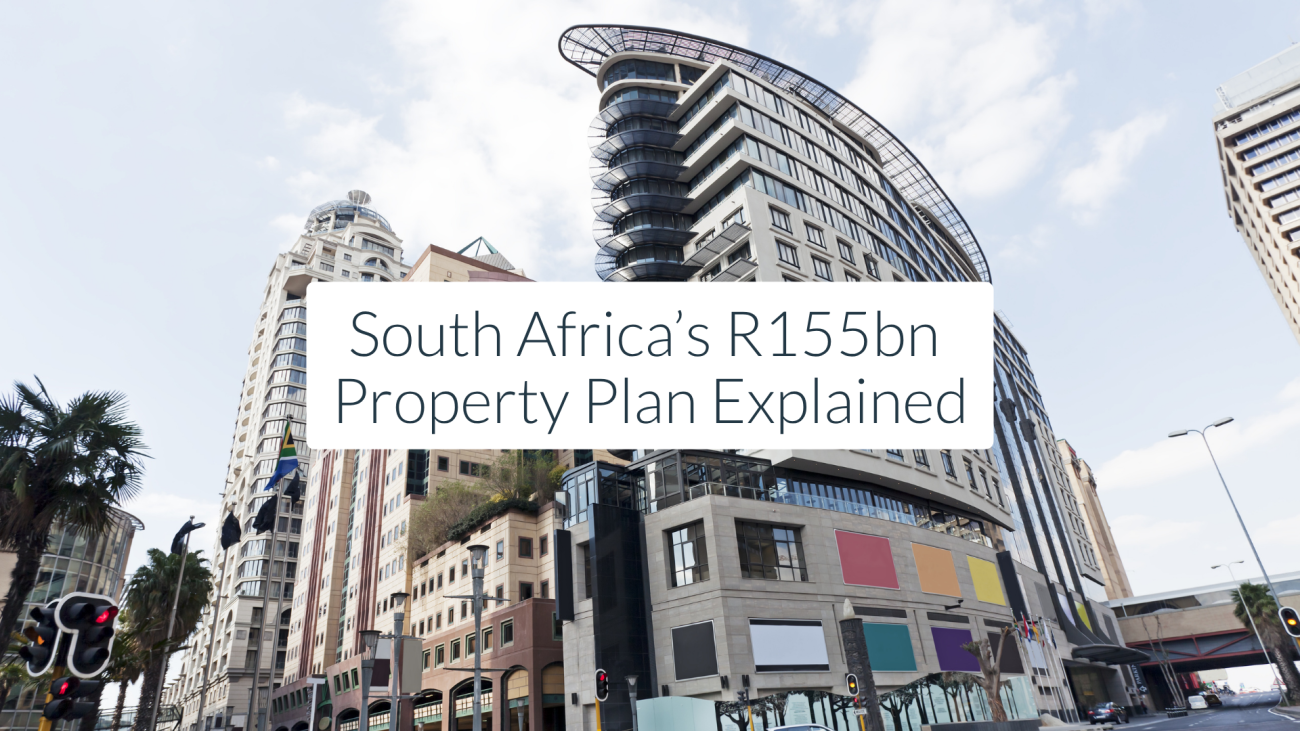
R155bn Property Plan

SANPC & SA’s R155bn Property Plan Explained

What You Need to Know About the Government’s R155bn Property Plan

By John Jack, CEO of Galetti Corporate Real Estate

South Africa’s R155bn Property Plan marks one of the most significant structural shifts in how the state approaches real estate ownership, management, and long-term value creation. As the country’s largest property owner, government controls a vast portfolio that has historically been underutilised, poorly maintained, and inefficiently managed.

That could change with the proposed South African National Property Company (SANPC), a new state-owned entity set to oversee roughly 88,000 buildings and five million hectares of land valued at about R155 billion.

The idea behind SANPC is simple: introduce professional asset management and commercial discipline to public property. If successful, this shift could improve building conditions, increase efficiency, and unlock significant long-term value for the state. However, transforming a portfolio of this size will take time, with meaningful impact likely only emerging over the next decade.

Understanding the R155bn Property Plan and SANPC’s Role

At its core, the R155bn Property Plan is about repositioning government-owned real estate as a strategic asset rather than a passive liability. From a market perspective, this represents a transition towards institutional-grade asset management, similar to what is seen in listed property funds and sovereign wealth-backed portfolios globally.

SANPC’s mandate is expected to include:

  • Centralised asset oversight and performance tracking
  • Structured maintenance and refurbishment programmes
  • Strategic disposal or repurposing of non-core assets
  • Improved leasing and occupancy management

From our experience advising corporate occupiers and property owners, the lack of centralised control has long been a key inefficiency in the public sector. Introducing a single, accountable entity could significantly improve decision-making speed, capital allocation, and long-term planning.

Inefficiencies Must Be Addressed Within the R155bn Property Plan

One of the biggest opportunities within the R155bn Property Plan lies in addressing inefficiencies. Government faces a maintenance backlog of nearly R30 billion while spending around R6 billion annually leasing office space from private landlords – despite owning many vacant buildings.

Redirecting funds from leasing into upgrading state-owned properties could reduce waste and strengthen public assets.

This approach would require substantial upfront investment, particularly to refurbish neglected buildings. But it could also stimulate economic activity, boosting construction, infrastructure upgrades and local job creation. Strong governance and transparency will be essential here.

SANPC could also reposition government property as a revenue-generating asset rather than simply operational infrastructure. The long-term vision includes building a sovereign-style investment platform, where public real estate contributes to national income and attracts private investment.

A key insight from working within the commercial property sector is that underutilised portfolios often represent hidden value. Unlocking that value requires disciplined capital deployment, clear performance benchmarks, and a long-term view – all of which SANPC aims to introduce.

Revitalisation Opportunities Linked to the R155bn Property Plan

Beyond internal efficiencies, the R155bn Property Plan has the potential to support urban regeneration. Many government buildings are located in key economic hubs, including struggling central business districts.

Upgrading these assets could help revitalise surrounding areas, restore investor confidence, and attract further development.

Planned projects reportedly include:

  • Redevelopment of government precincts
  • Upgrades to logistics infrastructure such as harbours
  • Improvements to public service facilities including courts and police stations

From a real estate advisory perspective, this type of intervention often acts as a catalyst. When large, visible assets are upgraded, it signals confidence in a node, which in turn encourages private sector investment and stabilises surrounding property values.

In nodes where vacancy and neglect have become entrenched, this kind of structured intervention can materially shift market sentiment.

How the R155bn Property Plan Impacts the Office Market

The private property sector may also feel the effects of the R155bn Property Plan. Government tenants currently occupy a large share of lower-grade office space, and a shift back into state-owned buildings could increase vacancies in that segment.

However, any changes are expected to happen gradually over several years.

In the short term, government-owned properties are unlikely to disrupt rental pricing significantly, as they typically operate at market-related levels and involve complex leasing structures.

From a leasing and advisory standpoint, this creates a nuanced outlook:

  • B-grade and lower-grade office stock may experience increased vacancy pressure
  • Well-located, high-quality office assets are likely to remain resilient
  • Landlords reliant on government tenants may need to reposition or diversify

A key takeaway is that this is not an immediate disruption, but rather a slow structural shift that market participants need to monitor closely.

Investment Implications of South Africa’s R155bn Property Plan

For investors, the R155bn Property Plan introduces both risk and opportunity.

On one hand, reduced government leasing could impact income stability in certain office segments. On the other, the introduction of a more structured, commercially driven public property platform could unlock new forms of partnership and investment.

Potential opportunities include:

  • Public-private partnerships on redevelopment projects
  • Access to repositioned or surplus government assets
  • Increased activity in construction and infrastructure-linked sectors

From an investment strategy perspective, this reinforces the importance of asset quality, location, and tenant diversification. Portfolios heavily weighted towards single tenant reliance, particularly government, may require reassessment.

Governance, Execution, and Long-Term Outlook

While the R155bn Property Plan presents a compelling framework, execution will ultimately determine its success.

Key risks include:

  • Governance and oversight challenges
  • Funding constraints for large-scale refurbishment
  • Operational inefficiencies during the transition phase

However, if managed effectively, SANPC could introduce a level of professionalism and accountability that has historically been lacking in public sector property management.

Based on market experience, large-scale portfolio transformations typically unfold over extended periods. The expected timeline of meaningful impact over the next decade aligns with global benchmarks for similar initiatives.

Final Thoughts on the R155bn Property Plan

The creation of SANPC represents a significant shift in how South Africa manages public property. While challenges around scale, funding, and governance remain, the concept offers a clear opportunity: turn a largely underperforming asset base into a driver of economic growth, investment, and long-term value for the state.

From a commercial real estate perspective, the R155bn Property Plan should be viewed as a structural evolution rather than a short-term disruption. For investors, landlords, and occupiers, the key will be understanding where the risks lie and where new opportunities are likely to emerge as the strategy unfolds.

For broader market insights, visit our LinkedIn newsletter or visit our Newsroom

Where to Invest in South African Property in 2026

Where to Invest in South African Property in 2026

Where to Invest in South African Property in 2026

Where to Invest in South African Property in 2026 is a question increasingly shaped by fundamentals rather than speculation. After several years of recovery, South Africa’s property market enters 2026 on a much firmer footing. Lower interest rates, improved infrastructure stability and renewed investor confidence are reshaping capital flows, concentrating opportunity in specific regions and asset classes rather than across the board.

The year ahead will reward selectivity over scale. Investors focusing on strong fundamentals, measurable demand, and structural growth are likely to outperform.


Where to Invest in South African Property in 2026

Here’s where attention is turning.

1.    Industrial Property: Gauteng’s Investment Anchor

Industrial property remains the backbone of investment in Johannesburg. Demand is particularly strong for assets in the R10 million to R40 million range.

Investors are prioritising:

  • Tenanted industrial assets with steady income
  • Properties offering potential for redevelopment or rental growth
  • Logistics-focused facilities along major transport corridors
  • Modern warehouses capable of supporting market-related rentals


Top industrial hotspots include the N1 corridor from Waterfall through Midrand to Louwlardia, and the eastern belt from Kramerville to Pomona. Quality stock remains limited, which continues to support rental levels for well-positioned properties.


2.    Prime Office Nodes: A Structural Reset

South Africa’s office sector is undergoing a structural recovery. In key nodes such as Bryanston, Rosebank, Sandton, and Umhlanga, older office stock is being permanently removed through residential conversions, rezoning for high-density development, and mixed-use repositioning.

This reduces vacancy pockets, stabilises rentals, and strengthens demand for premium space. Increasing residential density around office hubs also creates wider benefits, such as a boost in retail activity, infrastructure upgrades, long-term node resilience, and improvements to the public space.

These projects also create more affordable, high-density housing for younger professionals, supporting stronger live-work integration.


3.    Coastal Growth Corridors Gain Momentum

Coastal regions continue to attract both residential and commercial capital.


Western Cape

Industrial and logistics demand remains particularly strong in the northern suburbs, central industrial belt, and the airport precinct. This is because these areas enjoy port and airport access, expanding logistics networks, and ongoing residential migration.

Decentralised office nodes such as Somerset West, Paarl and Tygervalley are also showing promise as businesses follow population growth into the Winelands. George is increasingly positioning itself as a regional commercial hub, supported by airport expansion, population growth and rising office demand.

KwaZulu-Natal

KwaZulu-Natal is reasserting itself as a competitive coastal investment destination. In fact, market sentiment in parts of the province is at its strongest level in over a decade. Key drivers include:

  • Durban’s strength as a logistics hub
  • Infrastructure stabilisation
  • Renewed investor confidence
  • Growing activity along the KZN South Coast


4.    Offshore Opportunity: Dubai in Focus

Beyond South Africa’s borders, Dubai is emerging as a key destination for capital diversification. Transaction volumes have surged from around 200,000 annually to approximately 270,000, with total transaction values reaching roughly AED 680 billion. Reasons for this growth include:

  • Strong population growth
  • International capital inflows
  • Corporate relocation activity
  • High transaction velocity
  • A tax-efficient environment


Auctions are gaining traction in Dubai as a fast, transparent, and competitive method of sale. Galetti’s expansion into Dubai gives South African investors access to this high-demand market through a trusted, structured platform, with exposure to dollar-based returns.

Investing with Intention in 2026

The 2026 property landscape is defined by concentration, not broad-based expansion. For investors prepared to focus on fundamentals and act strategically, 2026 presents a cycle shaped less by speculation and more by disciplined, data-led decision-making.


Not ready to buy a property and looking to let?

347 property listings to let in Sandton

Why Dubai? Why Now

Why Dubai. Why Now. And Why Auctions Might Be the Smartest Move in the Room.

There are cities that grow. And then there are cities that compound. Dubai is compounding.

Eighteen months ago, when this move was first seriously discussed, the market was already humming at around 200,000 transactions per year. Fast forward, and we’re looking at roughly 270,000 completed transactions moving through the system in a single year. That’s a structural surge.


Total transaction value?

About AED 680 billion  .


Those are “global capital is reallocating” numbers.


1.The First Rule of Real Estate: Know the Network

Real estate is people. Before entering any market, the real question isn’t “What’s the yield?” It’s “Who do we know?”

Brokerage, agency, auctions – all of it depends on network density. Sellers. Investors. Brokers. Developers. Corporate tenants. Dealmakers. You need to be able to plug into the ecosystem.

Dubai is relationship-driven at speed. And when you have the right network anchors in place, entry friction drops dramatically.

For investors and dealmakers reading this:

Your first investment in a new market … is access.


2. Supply: The Illusion of Abundance

You can leave Dubai for two weeks and come back to a new skyline. Yes, approximately 150,000 new properties are coming to market. Yes, 85% is apartment-driven, 15% villa-focused. But commercial supply is tight. Very tight.

In the last five to six years, commercial development has lagged meaningfully . Office space in prime nodes? Rates are jumping 30–40% annually in areas like DIFC. Landlords are pioneering new benchmarks.

If you’re a corporate expanding, pricing clarity is disappearing. If you’re a landlord, you’re guessing where the ceiling is.

And guessing in a market like this is expensive.


3. Why Auction?

Traditional brokerage asks one dangerous question: “What was the last deal done?” In a market resetting pricing every quarter, that question becomes irrelevant. Auction flips the model. You let the market reveal itself.

It’s transparent.

It’s competitive.

It’s time-bound.

It removes underpricing risk.

In an auction room:

    • Buyers see who they’re bidding against.
    • Sellers see real-time demand tension.
    • Corporates that need space can express that urgency transparently.
    • Investors don’t overpay – they pay one increment above the next bidder  .

From a seller perspective, you capture the last bid increment – not the first.


4. Why This Model Fits Dubai Specifically

Dubai does not fear innovation. It feeds on it.

It is one of the few markets globally where:

    • Transparency is culturally accepted.
    • Competition is embraced.
    • Speed and innovation is respected.
    • Capital moves decisively.

Auction is a price discovery in a volatile, high-growth market. And when transaction volume sits at 270,000+ annually, even marginal efficiency gains create enormous value.


5. What This Means for Investors

If you are an investor, here are the strategic implications:

    • In high-growth markets, static pricing models underperform.
    • Liquidity plus transparency reduces execution risk.
    • Scarce commercial stock will reprice faster than residential.
    • Time-bound sales mechanisms compress decision cycles and improve capital velocity.


6. What This Means for Dealmakers

If you’re a dealmaker watching this unfold, Dubai needs operators who understand:

    • Capital flow.
    • Market psychology.
    • Structured sales environments.
    • And how to navigate institutional-level demand.

The next phase of this market will be won by strategic players.

Considering joining us? Join the Team.


“Why Dubai?” is the wrong question. The better question is: Where is global capital choosing to concentrate – and what sales model best extracts value in that environment?

Right now, the numbers point clearly to Dubai. And when pricing resets at 30 – 40% per year in prime commercial nodes , you need better mechanisms.

Dubai is expanding.

Capital is consolidating.

Supply is tightening in key sectors.

The only real debate left is how you choose to participate.

And in markets like this, waiting is usually the most expensive strategy of all.

Join our exclusive database: https://galetti.ae/

Galetti Expands to Dubai

Galetti Expands to Dubai as Commercial Property Market Enters a New Cycle

Galetti Expands to Dubai as Commercial Property Market Enters a New Cycle

Galetti Group is stepping onto the global stage with the launch of Galetti Auctions Dubai in February 2026! This is a major milestone for the South African-born property firm as it positions Galetti at the centre of one of the world’s fastest-growing real estate markets, just as Dubai’s commercial sector enters a new phase of structural growth and market reset.

The new leg – Galetti Auctions Dubai will be led by Jenna Robertson, an award-winning real estate professional with more than a decade of experience across the South African and UAE markets. Her background spans commercial, retail, and industrial property, with expertise in leasing, sales, and strategic advisory for both regional and multinational clients.

Why Dubai, Why Now, and Why Auction?

Dubai’s commercial property market is known for its pace, with transactions typically concluding in just 2 to 6 weeks. However, traditional negotiation-based sales can still cause delays and pricing inefficiencies, particularly as offshore demand accelerates.

As Dubai’s commercial sector matures and pricing becomes more competitive, auction-based sales align with a market that rewards speed and decisive action.

Refined over nearly two decades across multiple asset classes, Galetti’s auction methodology is designed for markets where serious buyers are willing to compete openly for quality assets. Galetti’s launch is the perfect time to introduce a competitive and transparent sales model that doesn’t limit pricing.

Galetti’s action process includes:

    • Detailed upfront market assessments to ensure realistic pricing
    • Targeted marketing campaigns focused on geo-located, qualified buyers
    • Active bidder engagement and screening ahead of auction day
    • Clear timelines and live competitive bidding
    • No post-auction renegotiations once the hammer falls

Have a look at our current South African auction listings

Rapid Population Growth

Dubai continues to attract global investors, corporates, and high-net-worth individuals at scale. The UAE now leads the world in net millionaire migration, with thousands relocating annually to establish businesses, family offices, and regional headquarters. As population growth continues to outpace supply, demand remains particularly strong across prime commercial assets, logistics facilities, and mixed-use developments.

 Key growth drivers include:

    • Rapid population expansion, projected to exceed 4.2 million by 2026
    • Strong demand for Grade A commercial and industrial space
    • Significant infrastructure investment under the Dubai 2040 Urban Master Plan
    • New urban hubs, transport corridors, and mixed-use developments
    • Business-friendly regulation, Golden Visas, and a tax-efficient environment

Following South African Capital Offshore

Over the past five years, South African investors, family offices, and listed funds have increasingly diversified offshore in search of stable, dollar-based returns. Dubai consistently features at the top of that list. Galetti’s Dubai launch provides the familiar, trusted platform for South African investors looking to access this opportunity with confidence.

Reasons for the Dubai market boom include:

    • No income tax or capital gains tax
    • Strong rental demand and escalating yields
    • Transparent and well-regulated frameworks
    • A globally connected business hub
    • Ongoing infrastructure expansion and economic momentum

Start of a New Chapter

Since hosting its first live auction in Johannesburg in 2022, Galetti Auctions has expanded rapidly across South Africa, achieving consistent year-on-year growth in asset value sold. The Dubai launch represents the next evolution of that journey.

It’s about following client demand, unlocking global opportunities, and building a bridge between South African capital and one of the world’s most exciting commercial property markets.

As Dubai’s commercial sector continues to reset and scale, Galetti Auctions Dubai is positioning itself at the forefront of a smarter, faster way to transact.