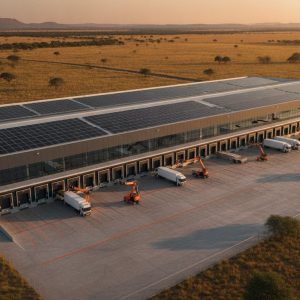
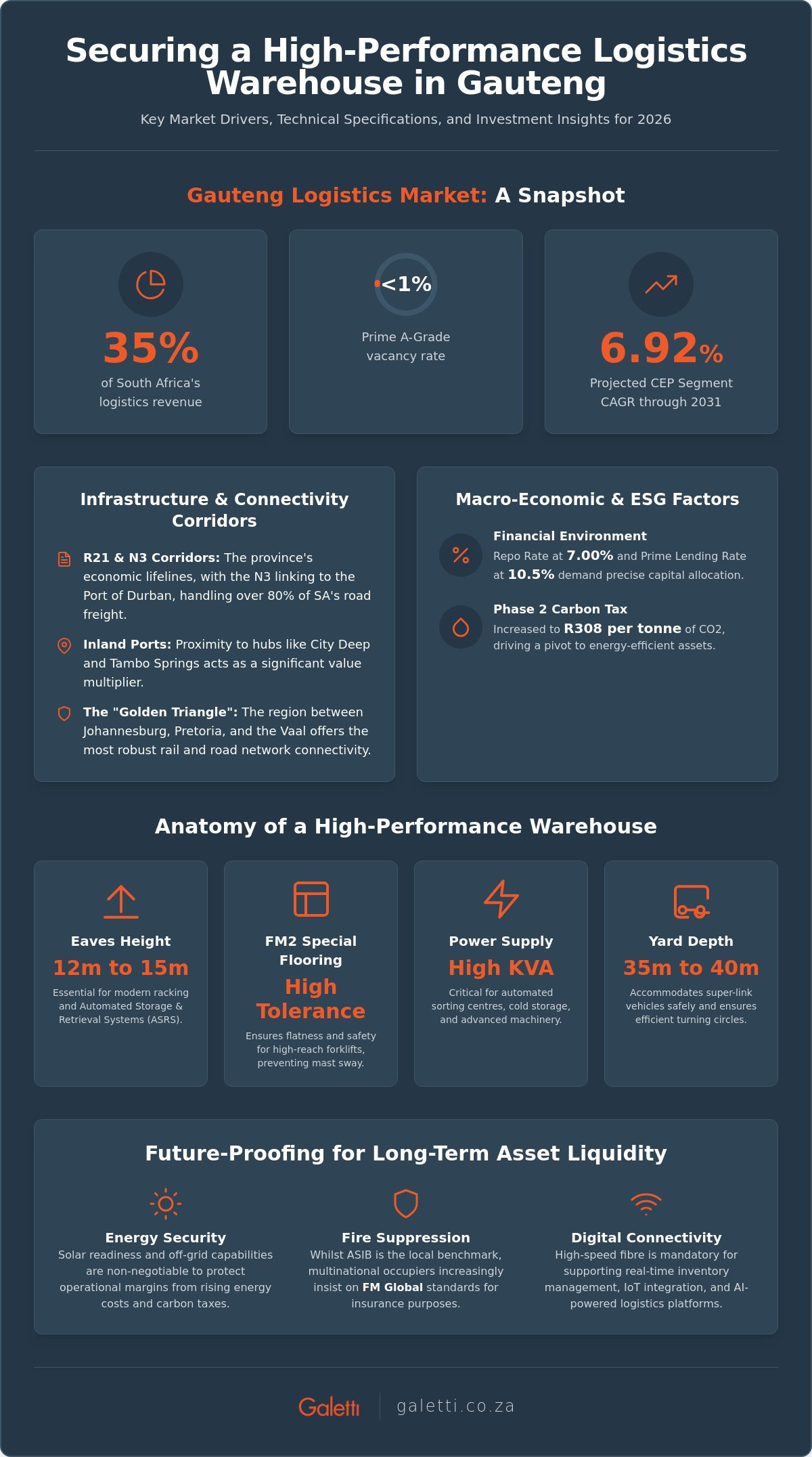
With Gauteng accounting for 35% of South Africa’s logistics revenue, the competition for premium space has pushed prime A-grade vacancy rates below 1%. The search for a logistics warehouse for sale Gauteng is now a high-stakes race against rising construction costs and a shrinking pool of tech-enabled assets. You likely recognise that a traditional warehouse is no longer sufficient. Modern hubs must navigate Phase 2 carbon tax regulations and a shifting legal landscape to remain viable.
We understand the frustration of opaque market pricing and the difficulty of finding facilities that align with 2026 ESG standards. This guide provides the clarity needed to master these complexities. We’ll deliver expert insights on warehouse specifications, acquisition strategies, and the rigorous due diligence required to secure a future-proof asset. You will learn how to optimise capital expenditure and ensure long-term liquidity in South Africa’s most vital economic hub.
Key Takeaways
- Analyse how decentralised distribution and road infrastructure upgrades are redefining asset valuations across the province.
- Master the technical specifications required for high-performance facilities, from FM2 flooring standards to optimal eaves heights for automation.
- Navigate the acquisition process for a logistics warehouse for sale Gauteng by leveraging transparent auction platforms or strategic private treaty negotiations.
- Execute comprehensive due diligence to identify potential liabilities in zoning, municipal bylaws, and environmental compliance.
- Align your industrial portfolio with 2026 market dynamics through expert advisory and data-driven investment strategies.
The Gauteng Logistics Market: Strategic Drivers in 2026
Gauteng remains the undisputed core of Southern African commerce. It generates over a third of the nation’s activity in logistics, serving as the primary gateway for the Southern African Development Community (SADC). Securing a logistics warehouse for sale Gauteng requires an understanding that the market is no longer a monolith. We’re seeing a decisive shift toward decentralised distribution. Major occupiers are moving away from congested traditional nodes to strategically positioned satellite hubs that reduce “dead mileage” and improve delivery lead times.
Demand is currently bifurcated between massive “Big Box” regional DCs and agile last-mile delivery centres. The Courier, Express, and Parcel (CEP) segment is projected to grow at a CAGR of 6.92% through 2031, fueling the hunt for smaller, high-tech facilities near urban centres. Meanwhile, national industrial vacancy rates have tightened to below 4%. In prime A-grade precincts, this figure drops below 1%, making high-spec assets incredibly sought after and tightly held by institutional funds.
Infrastructure and Connectivity Corridors
Asset valuations in Gauteng are inextricably linked to transit efficiency. The R21 and N3 corridors remain the province’s economic lifelines. The R21 serves the Aerotropolis and northern Pretoria, while the N3 provides the critical link to the Port of Durban, which handles over 80% of South Africa’s road freight. Proximity to inland ports like City Deep or the developing Tambo Springs intermodal hub acts as a significant value multiplier. Investors prioritise the “Golden Triangle” between Johannesburg, Pretoria, and the Vaal because it offers the most robust connectivity to rail and road networks.
Macro-Economic Factors Affecting Industrial Sales
The financial environment in 2026 presents both challenges and opportunities. With the repo rate at 7.00% and the prime lending rate at 10.5%, capital allocation must be precise to ensure yield compression doesn’t erode returns. Corporate buying behaviour is now heavily influenced by ESG mandates. Phase 2 of the carbon tax has increased the rate to R308 per tonne of CO2 equivalent, forcing a pivot toward energy-efficient warehouses. Facilities with solar integration and sustainable water management aren’t just “nice to have” anymore; they’re essential for long-term asset liquidity. For those looking to enter this competitive space, our corporate real estate sales division provides the market data necessary to execute informed acquisitions.
Technical Specifications of High-Performance Logistics Warehouses
Modern logistics is a game of volume and velocity. When evaluating a logistics warehouse for sale Gauteng, the traditional focus on square meterage is outdated. High-performance facilities in 2026 are defined by their technical ability to support advanced automation and rapid throughput. To remain competitive, assets must meet specific structural benchmarks that accommodate the latest supply chain technologies.
Key specifications for a premier logistics facility include:
- Eaves height: Modern racking and automated storage and retrieval systems (ASRS) require a minimum of 12m to 15m. Height is the most cost-effective way to scale operations without increasing the building’s footprint.
- FM2 special flooring: Standard industrial floors often lack the precision required for high-reach forklifts. FM2 flooring ensures the level of flatness necessary to prevent mast sway and ensure safety when operating at extreme heights.
- Power supply: Automated sorting centres and cold storage units require high KVA allocations. It’s essential to verify that the local grid or on-site substations can handle these increased loads before committing to an acquisition.
- Yard depth: Accommodating super-link vehicles safely requires a yard depth of at least 35m to 40m. This ensures efficient turning circles and reduces the risk of on-site congestion during peak operating hours.
Future-Proofing Your Industrial Asset
Energy security is a non-negotiable requirement for modern occupiers. Given that Phase 2 of the carbon tax has increased the rate to R308 per tonne, solar readiness and the move towards off-grid industrial operations are essential for protecting operational margins. Fire suppression standards also dictate the calibre of tenant you can attract. While ASIB is the local benchmark, many multinational occupiers now insist on FM Global standards for insurance purposes. Additionally, high-speed fibre connectivity is mandatory for real-time inventory management and AI-powered route optimisation.
Warehouse Efficiency Ratios
Maximum utility depends on the correct balance of space. Modern designs for a logistics warehouse for sale Gauteng typically limit office components to 5% or 10% of the total Gross Lettable Area (GLA). This ensures the majority of the capital is allocated to high-value storage volume. The loading configuration must also be fit for purpose. A strategic mix of dock levellers for heavy freight and on-grade ramps for smaller last-mile delivery vehicles provides the necessary operational flexibility. Cubic capacity represents the total usable volume of a facility and serves as the primary metric for modern logistics valuation.
Selecting a facility with the wrong technical profile can lead to significant retrofitting costs later. To ensure your next acquisition meets these rigorous 2026 standards, it’s advisable to consult with our industrial specialists who can vet the technical viability of potential sites.
Acquisition Strategies: Navigating Auctions and Private Sales
Acquiring a logistics warehouse for sale Gauteng is a strategic exercise that demands the right channel for your specific capital requirements. The market has evolved beyond simple listings. Today, sophisticated investors choose between the accelerated timeline of a commercial auction and the nuanced negotiation of a private treaty sale. Each method offers distinct advantages depending on whether you prioritise speed or bespoke contract terms.
Commercial auctions have surged in popularity as a primary price-discovery mechanism. Unlike the residential sector where auctions often imply distress, the industrial market uses this platform to establish true market value for high-demand assets. It’s a transparent process. It eliminates the ambiguity of back-and-forth negotiations, providing a definitive sale date and a clean, unconditional contract. For corporate occupiers, this compressed timeline is often the most efficient way to secure a facility in a market where prime stock is scarce.
Private treaty sales, conversely, serve complex transactions where specific conditions precedent are required. These might include environmental remediation clauses or long-term leaseback arrangements. Whilst this path involves a more deliberate timeline, it allows for deeper due diligence and tailored financial structures. A strategic broker acts as the vital facilitator here, bridging the gap between a seller’s valuation and an investor’s yield requirements.
The Galetti Auction Advantage
A competitive bidding environment is the most effective way to maximise value. The Galetti auction platform provides industrial buyers with a transparent, tech-driven interface to participate in high-stakes sales. By aggregating qualified bidders into a single event, we significantly reduce the “days-on-market” for large-scale industrial disposals. This ensures that sellers achieve an optimal price whilst buyers benefit from a clear, public path to acquisition.
Private Treaty and Off-Market Opportunities
Not every premium asset reaches the public eye. Many high-value transactions occur within the “grey market,” where confidentiality is paramount for corporate reputation and operational stability. Accessing these off-market logistics properties requires an established advisory network with deep roots in the Gauteng industrial nodes. Our team specialises in corporate real estate sales, providing tailored acquisition strategies that respect the need for discretion whilst delivering superior asset selection. This proactive approach ensures you’re positioned to act when institutional-grade stock becomes available through private channels.
Industrial Property Due Diligence Checklist
Acquiring a logistics warehouse for sale Gauteng is a complex undertaking that extends far beyond a surface-level inspection. Rigorous due diligence is the only way to protect your investment from hidden liabilities and ensure the asset remains liquid. In a market where prime A-grade facilities are scarce, the pressure to close a deal quickly shouldn’t override the necessity of a thorough investigation. It’s a high-stakes process. Finding a logistics warehouse for sale Gauteng that meets all regulatory benchmarks is increasingly difficult as older stock fails to keep pace with modern requirements.
Your checklist must begin with zoning and land-use rights. It’s vital to ensure your specific operations align with municipal bylaws, particularly if you require 24-hour activity or the storage of hazardous materials. Environmental audits are equally critical, especially in older industrial nodes where soil contamination from previous occupants can lead to massive remediation costs. A structural integrity report should go deeper than the warehouse floor, assessing roof spans, fire wall compliance, and the condition of all load-bearing elements.
Don’t overlook title deed restrictions. Servitudes for municipal infrastructure or power lines can significantly limit your ability to expand the yard or increase eaves height. These legal encumbrances must be identified early to avoid overpaying for a site with restricted utility.
Legal and Financial Verification
If you’re purchasing a multi-tenanted logistics park, reviewing existing lease agreements is mandatory. You must analyse escalation clauses, remaining terms, and the financial standing of current occupants. Municipal accounts require equal scrutiny. Any arrears in rates or utility payments can delay the transfer process indefinitely. From a tax perspective, understand the implications of VAT versus Transfer Duty. Many industrial sales qualify as a “going concern,” allowing for a zero-rated VAT transaction, but this requires precise contractual structuring to meet SARS requirements.
Operational Assessment
Operational efficiency depends on robust security and compliance. With the 2026 amendments to the PIE Act focusing on illegal land occupation, perimeter fencing and advanced access control are critical for asset protection. You must also evaluate staff amenities to ensure they meet occupational health and safety (OHS) standards. Finally, conduct a cost-benefit analysis of the facility’s lighting. Balancing natural light through translucent roof sheets with energy-efficient LED systems is essential for mitigating the impact of the R308 per tonne carbon tax on your operational expenditure.
Partnering with Galetti for Logistics Real Estate Excellence
Success in the Gauteng industrial market requires more than just a listing service. It demands a partner that translates macro-economic shifts into executive action. Galetti integrates 18 years of on-the-ground expertise with proprietary market data to ensure your search for a logistics warehouse for sale Gauteng results in a yield-optimised acquisition. We don’t just find space; we identify assets that survive market volatility and regulatory shifts.
Our approach is built on clarity and efficiency. We serve a diverse client base including institutional landlords, private investors, and global corporate occupiers. By maintaining a national network and a results-oriented corporate tone, we facilitate transactions that others might overlook. Whether you’re navigating the complexities of Phase 2 carbon tax or assessing the technical viability of a site, our team provides definitive answers to complex problems. The process is streamlined, moving you quickly from initial inquiry to a specific service or solution.
Integrated Property Services
Securing an asset is only the first phase of the investment lifecycle. Through our corporate services division, we provide comprehensive portfolio valuations and strategic advisory to ensure long-term asset liquidity. Post-acquisition, our leasing experts assist in securing high-quality tenants to stabilise your revenue stream. For a deeper analysis of market trends, refer to our guide on industrial real estate investment ZA, which outlines long-term growth strategies for the current cycle.
Taking the Next Step
The path from initial enquiry to successful asset handover is methodical. Our industrial specialists are ready to guide you through every milestone of the acquisition process. To begin your search or refine your portfolio strategy, consider the following actions:
- Contact a Galetti industrial specialist for a confidential consultation regarding a logistics warehouse for sale Gauteng.
- Register for upcoming auctions to access transparent price discovery for premium industrial stock.
- Invite our team to evaluate your current holdings if you are looking to divest.
- If you intend to dispose of assets, list your property with us to reach our global network of qualified buyers.
Our commitment to professional industry standards ensures that every transaction is handled with the precision your corporate strategy requires. We provide the expertise; you gain the strategic advantage.
Securing Your Industrial Future in Gauteng
Navigating the 2026 industrial market requires a shift from viewing property as simple storage to treating it as high-performance infrastructure. Success depends on identifying assets that meet FM2 flooring standards and high-eaves requirements whilst remaining resilient against Phase 2 carbon tax increases. Finding a premium logistics warehouse for sale Gauteng is now a race for quality in a market where prime vacancies remain below 1%. You can’t afford to overlook the technical and legal nuances of modern industrial due diligence.
We bring 18+ years of commercial real estate leadership to every transaction. Our specialised industrial advisory team and proprietary technology-driven auction platform provide the competitive edge needed to secure future-proof hubs. We’re ready to help you optimise your capital expenditure and ensure long-term asset liquidity in South Africa’s most vital economic corridor. Let’s move your portfolio forward with clarity and precision.
Frequently Asked Questions
What is the average price per square metre for a logistics warehouse in Gauteng?
Prices for industrial facilities in Gauteng currently range from approximately R950/m² to R10,305/m² depending on the specific node and building specifications. Prime A-grade assets in high-demand corridors command the upper end of this spectrum. It’s also vital to consider replacement costs, as average industrial construction costs in the province have reached R13,330/m² in 2026.
How does eaves height affect the valuation of a logistics property?
Eaves height is a critical value driver because it determines the total cubic capacity and racking potential of the facility. Modern operators require heights between 12m and 15m to accommodate advanced automation and high-density storage. A warehouse with superior height allows for greater pallet volume within the same footprint, directly justifying a higher market valuation compared to older, low-eave structures.
What are the benefits of buying a logistics warehouse for sale Gauteng via auction?
Auctions offer an efficient, transparent price-discovery mechanism that establishes true market value through competitive bidding. This method eliminates the ambiguity of protracted private negotiations and provides a definitive sale date with a clean, unconditional contract. For investors seeking a logistics warehouse for sale Gauteng, our auction platform ensures a streamlined acquisition process within a compressed timeline.
Are there any specific zoning requirements for hazardous chemical storage in Gauteng?
Yes, storing hazardous materials requires specific land-use rights, typically found under Industrial 1 or 2 zoning with additional special consent. Occupiers must also comply with Major Hazard Installation (MHI) regulations and municipal fire bylaws regarding containment and safety distances. You should always verify that the zoning certificate explicitly permits the handling of dangerous goods before concluding a purchase.
What is the difference between a distribution centre and a standard warehouse?
A distribution centre is engineered for high-velocity throughput and rapid inventory turnover, whereas a standard warehouse is primarily intended for static, long-term storage. Distribution centres feature specialised infrastructure like cross-docking, multiple dock levellers, and expansive yards for super-link manoeuvrability. Standard warehouses often lack the technical specifications required for the fast-paced courier and parcel segments.
How can I verify the floor loading capacity of an existing industrial building?
The most reliable method is to review the original structural engineer’s completion certificate or the building’s technical blueprints. If these records are unavailable, you’ll need to commission a structural engineer to perform core testing on the slab. This assessment confirms if the floor meets the FM2 standards required to support the point loads of modern, high-reach racking systems.
What ESG features are most sought after by logistics tenants in 2026?
Solar power integration and energy-efficient LED lighting are the most prioritised features due to the R308 per tonne carbon tax rate. Tenants also look for translucent roof sheeting for natural light and rainwater harvesting systems for greywater use. These sustainable elements are now essential for reducing operational expenditure and ensuring the asset meets corporate governance requirements.
How does the proximity to O.R. Tambo International Airport influence warehouse prices?
Proximity to O.R. Tambo creates a significant price premium because it serves as the core of the Gauteng Aerotropolis. Facilities in nearby nodes like Jet Park and Isando offer unparalleled access to air freight and the R21 corridor, making them indispensable for time-sensitive distribution. This strategic advantage results in lower vacancy rates and higher capital growth compared to more isolated industrial areas.